2 hr 30 min
Beacon Hill Underground Railroad History Walk
Trace the paths of abolitionists and freedom seekers through Boston's historic streets on this intimate group experience.
Reserve
Hand-picked by our editors — the 5 best Underground Railroad tours from 12 reviewed.
Verified partners for every tour, free cancellation where available, and instant confirmation on every booking.
2 hr 30 min
Trace the paths of abolitionists and freedom seekers through Boston's historic streets on this intimate group experience.
Reserve
2 hr 30 min
Discover Revolutionary Boston on an intimate guided walk through all 16 historic landmarks
Reserve
2 hr 30 min
Explore all 16 historic Revolutionary War landmarks with a knowledgeable guide in one comprehensive walk
ReservePrices from verified partners. Availability updates in real time at checkout. Free cancellation policies apply where shown.
The landmarks, rooms, and views travelers on this tour remember — all visible on a single visit.
Built in 1806, this is the oldest extant Black church building in the country. It served as a vital community hub for abolitionist activities.
These row houses were home to free Black residents during the 19th century. They stand as a testament to the community that supported freedom seekers.
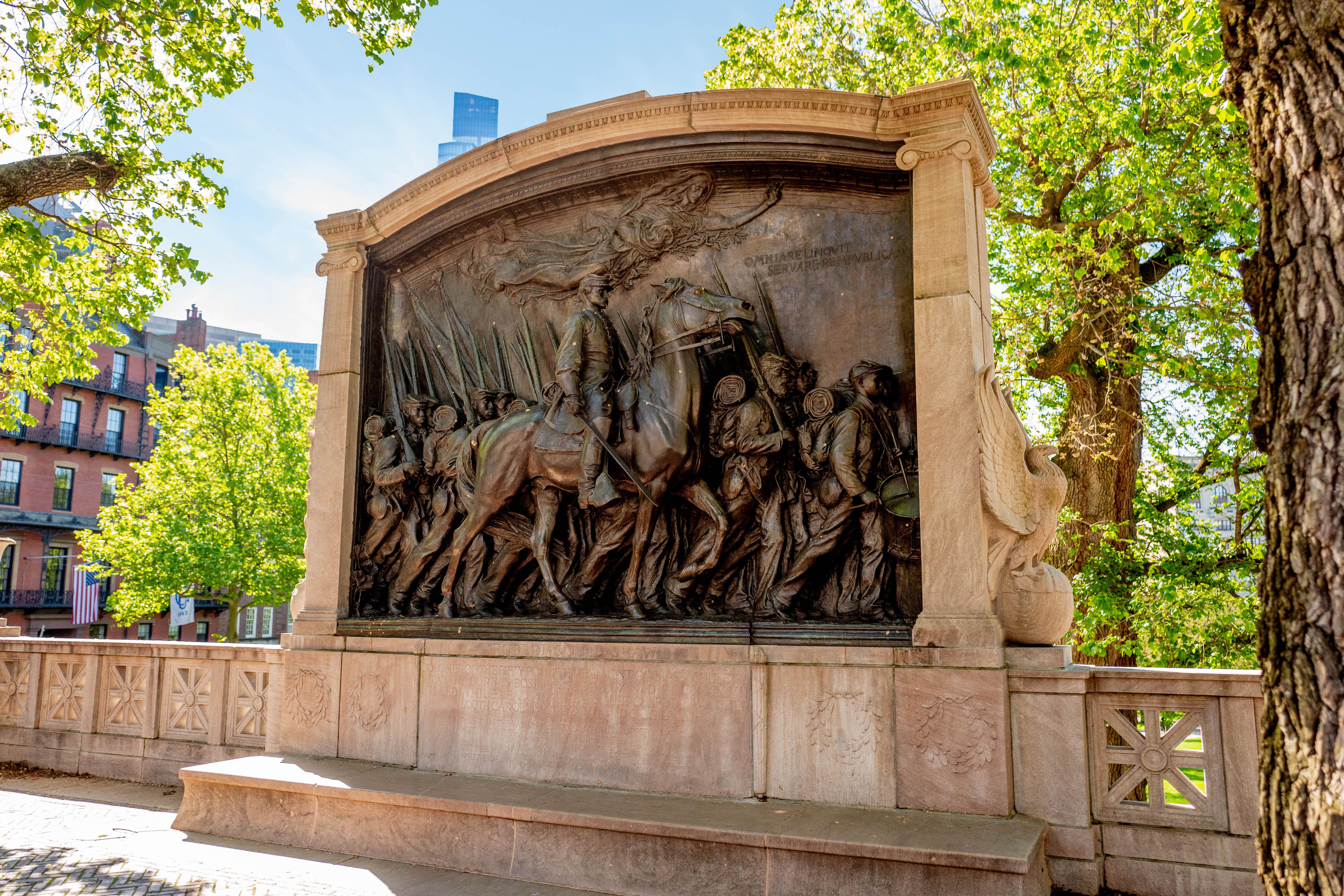
This relief sculpture honors the 54th Massachusetts Infantry, an all-Black regiment. It sits across from the State House and is a major focal point.
Established in 1835, this was the first public school building for Black children in the nation. It represents the historic struggle for equal education.
This school was one of the first in the city to be integrated in 1855. It highlights the long-standing commitment to educational equality in the neighborhood.
The Beacon Hill sites offer a deeply focused look at abolitionist history, while the Freedom Trail provides a comprehensive survey of the American Revolution; most visitors who do both find the former more emotionally resonant.
| Feature | Top pick Black Heritage Trail | Freedom Trail |
|---|---|---|
Historical Focus |
19th-century abolitionism | Revolutionary War era |
Group Size |
Self-guided or small groups | Large guided public groups |
Depth of Coverage |
Specialized narrative detail | Broad historical overview |
Walking Pace |
Moderate and reflective | Varies by guide speed |
Accessibility |
Hilly cobblestone streets | Urban sidewalks and streets |
| See tickets → |
Verdict: Choose the underground railroad walking tour boston for intimate thematic exploration, or book the freedom trail walking tour for a wider scope of Boston landmarks, noting that many travelers purchase underground railroad walking tour boston tickets alongside general city passes.
Choose your ticket, select your date, and reserve in under two minutes. Secure checkout handled by our verified partner.
Instant confirmation by email, with a mobile voucher you can save offline. No printing, no queuing at a collection desk.
Arrive at the entrance, show your voucher on your phone, and walk in. Most tickets include priority or skip-the-line access.
Practical details for your visit straight from our verified partners — hours, access, rules, and how to get there.
46 Joy Street, Boston, MA 02114
Official starting point for Black Heritage Trail information.
Take the MBTA Green Line to Park Street or Red Line to Charles/MGH.
From Boston Common, walk north toward Beacon Hill to reach Joy Street.
Wear comfortable walking shoes suitable for the uneven brick sidewalks and steep hills typical of Beacon Hill. Dress in layers appropriate for the current autumn weather.
There are no security checkpoints for this outdoor walking route. Visitors should keep personal belongings secure while navigating public sidewalks.
Photography is permitted throughout the public areas of the Black Heritage Trail and associated sites. Respect private residences and local traffic when capturing images.
The route involves historic streets with significant inclines and brick surfaces. Wheelchair users may find certain segments challenging due to older infrastructure.
Mobile phones are encouraged for accessing digital maps and audio guides. Ensure devices are charged before beginning your walk.
The trail is suitable for families interested in American history. Be aware that the route involves walking on active city streets with vehicle traffic.
No food or drink is served on the trail. Numerous cafes and restaurants are located within a short walk in the Beacon Hill district.
Leashed pets are permitted on public sidewalks. Please clean up after your pet at all times.
The underground railroad walking tour boston covers significant abolitionist history. Please remain on public pathways and be mindful of residential privacy.
46 Joy Street, Boston, MA 02114
Official starting point for Black Heritage Trail information.
Get directionsBest time to go, insider tips, nearby landmarks, and the cancellation fine print — flip through to skim what matters to you.
How crowds, weather, and events shift across the year.
Mild temperatures make the walking route pleasant with blooming gardens.
Expect warm days; complete your underground railroad walking tour boston in the early morning.
Cooler air is ideal for exploring the historic district comfortably.
Paths may be icy; exercise caution on steep Beacon Hill slopes.
Small details that turn a good visit into a great one.
Visit between 09:00–16:00 to align with museum hours and avoid peak crowds.
Prioritize supportive footwear for the uneven terrain encountered on your underground railroad walking tour boston.
Download digital maps before arrival to navigate the winding streets of Beacon Hill easily.
Many buildings on the route are private homes; please view from the public sidewalk.
Beacon Hill can be windy; check the forecast to ensure a comfortable experience during your underground railroad walking tour boston.
Non-bookable sights within a short walk — free to visit, easy to pair.
The oldest public park in the United States serving as a central hub.
An architectural icon with a prominent golden dome located atop the hill.
A historic thoroughfare lined with boutique shops and local eateries.
Historic cemetery housing graves of several Revolutionary War figures.
Flexible, no hidden fees.
The self-guided trail has an entrance fee of 0 USD. No cancellation is required for this outdoor experience.
Hand-picked options within walking distance — pick a district for vibe, or a specific hotel for convenience.
Converted historic jail offering modern amenities near the trail.
Charming property located in the heart of the historic district.
Convenient location for visitors exploring downtown attractions.
Elegant accommodation reflecting the historic character of Beacon Hill.
Various private apartment rentals available throughout the neighborhood.
Between 1800 and 1865, Beacon Hill sheltered more fugitive slaves per block than any other neighborhood north of the Mason-Dixon line. The slope between Pinckney Street and the Massachusetts State House became a nerve center of the abolitionist movement, its brick rowhouses concealing safe rooms, false chimneys, and coded doorways. At 66 Phillips Street, Lewis and Harriet Hayden hid thirteen freedom seekers in a single week in 1850, stacking barrels of gunpowder in the basement and vowing to ignite them if slave catchers approached. The African Meeting House, completed in 1806 at the corner of Smith Court, served as the oldest Black church structure in the United States and the founding site of the New England Anti-Slavery Society in 1832. The Boston Vigilance Committee, led by figures like William Cooper Nell and Robert Morris, operated from offices within walking distance of the State House, coordinating legal defenses, safe passage to Canada, and public resistance to the Fugitive Slave Act. The underground railroad walking tour Boston traces this network through fourteen marked stations along a 1.6-mile route, each plaque annotating a residence, meetinghouse, or schoolhouse where freedom seekers found refuge, medical care, or forged papers. The Smith School, where the abolitionist movement debated integration versus separate Black institutions, stands preserved at the trail's midpoint. Today the National Park Service maintains the Black Heritage Trail as a free, self-guided route with interpretive markers in English, Spanish, and Portuguese. Guided underground railroad walking tour Boston tours led by park rangers and independent historians depart from the Robert Gould Shaw Memorial opposite the State House, offering two-hour docent-led walks that decode architectural details—bricked-over windows, unusually wide cellars, rear alleyways—that once signaled safe harbor. The Museum of African American History at 46 Joy Street anchors the trail, its archives holding manumission papers, abolitionist correspondence, and the membership rolls of mutual aid societies that financed escapes north.

"Lewis Hayden stacked gunpowder barrels in his basement and vowed to ignite them if slave catchers approached."
A step-by-step walkthrough of the visit — what you'll see, how long each stage takes, and the details that matter.
You begin at the Robert Gould Shaw Memorial, where bronze soldiers march in bas-relief toward the State House dome. Your guide distributes a fold-out map marking fourteen stops in red. You cross Beacon Street and descend the north slope, passing rowhouses with Greek Revival porticos and fanlight transoms. At Smith Court, you pause before the African Meeting House, its Federal-style facade painted ochre. Inside, wooden pews face a second-floor gallery where Frederick Douglass spoke in 1860. You continue down Holmes Alley, a cobbled service lane barely wide enough for a handcart, and emerge at the Hayden House on Phillips Street. The guide points to a bricked transom above the rear door—a signal that safe passage was available. You walk north to Pinckney Street, where abolitionist families occupied seven consecutive addresses. The tour ends at the Museum of African American History, where you examine manumission documents and a ship manifest listing "cargo" that was actually human. The entire route covers 1.6 miles and takes two hours at a docent-led pace, or ninety minutes if you follow the self-guided trail markers and skip the museum.
The trail is open 00:00–23:59 daily.
There is 0 USD entrance fee for self-guided tours of the outdoor trail.
We recommend arriving between 09:00–16:00 to avoid peak crowds and align with local museum hours.
The route features steep, uneven brick sidewalks that may challenge those with limited mobility.
Yes, photography is permitted in public areas during your underground railroad walking tour boston.
Bring comfortable walking shoes, water, a charged mobile phone, and weather-appropriate clothing.
While there is no food on the trail, you can find many options in the surrounding Beacon Hill neighborhood.
Yes, children are welcome on the underground railroad walking tour boston, provided they are supervised near street traffic.
You can take the MBTA Red Line to Charles/MGH or walk from Boston Common to 46 Joy Street.